









ChatGPT has 800 million users per week. They ask questions and get answers. Without visiting your website.
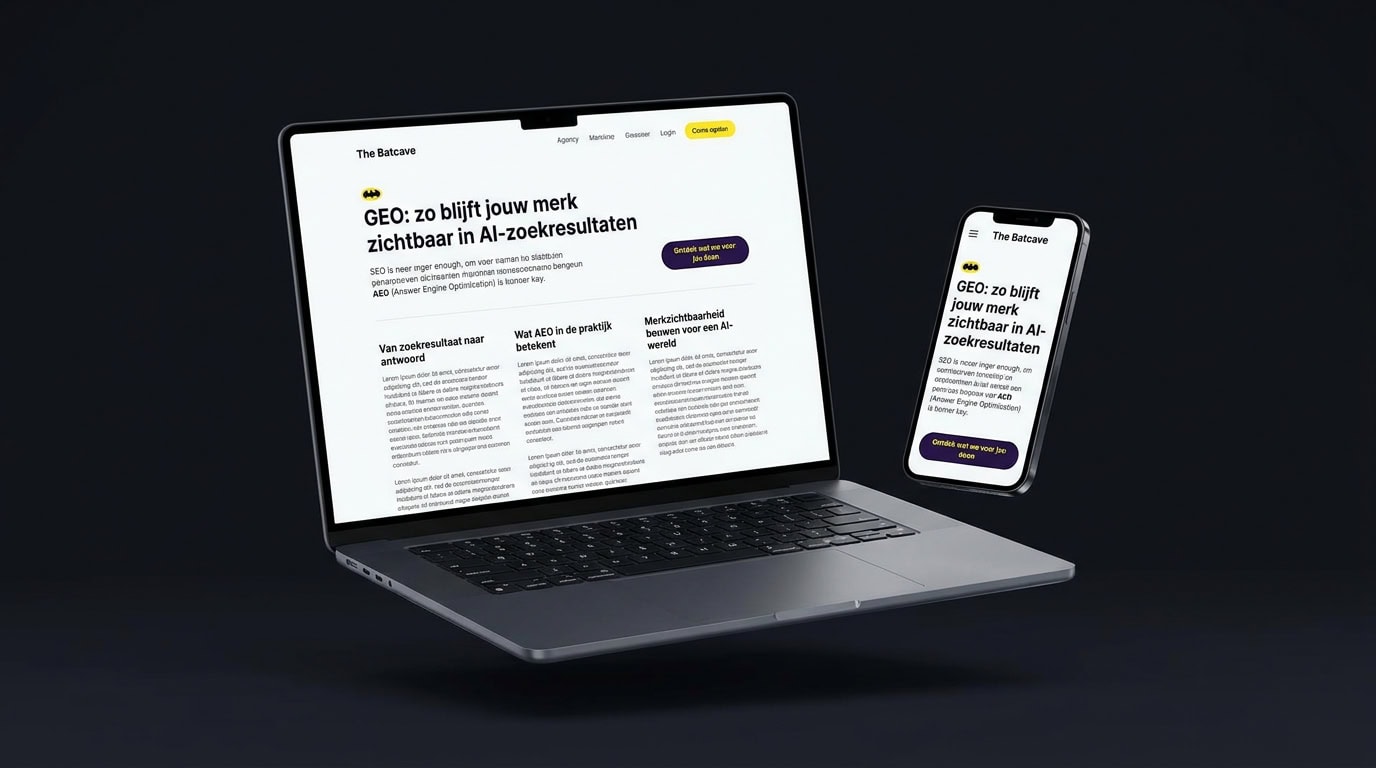
This is no longer a thing of the future. Google AI Overviews, ChatGPT, Perplexity: they deliver direct answers to questions from consumers and buyers. Anyone who does not appear in those answers does not exist. The discipline that tackles this is called GEO: Generative Engine Optimization. Related to AEO (Answer Engine Optimization), but more specifically aimed at generative AI systems. And for everyone investing in digital marketing, this is the most urgent topic of 2026.
From search result to answer
Traditional SEO is about ranking. You optimise a page so it scores high for a search term, and the user clicks through to your site. That model is cracking. Gartner predicts that 25% of organic search traffic will shift to AI chatbots by the end of 2026. Google itself increasingly shows an AI-generated answer at the top, compiled from multiple sources. You see your click-through rate fall, even if you still rank well.
GEO is about a different goal: being cited, not being found. It is about generative AI systems naming, recommending or describing your brand when someone asks a relevant question. That requires a different approach to content, structure and authority.
95% of the links AI tools cite come from non-paid media sources. Paying does not work here. Building authority does.
What GEO means in practice
GEO does not require a total overhaul of your content strategy, but it does require a different focus. The best content in 2026 answers the main question in the first few sentences, and then builds out with context, comparisons and concrete examples. That gives AI systems something usable to extract, and gives human readers a reason to stay. Write clearly, write in a structured way, write about something you genuinely have expertise in. Entity consistency counts heavily: make sure your name, services and specialisations are described identically everywhere online. Wikipedia, Google Business Profile, press releases, industry directories: consistency builds trust with AI models.
Building brand visibility for an AI world
For brands this means that visual identity and content strategy move closer together. A strong, consistent brand scores better in AI searches because it is more recognisable as an entity. A vague or inconsistent brand disappears into the noise, even if it makes good content. The combination of a clear brand position, structured content and a technical SEO foundation is exactly what the brands winning now do well. Not coincidentally, that is also the core of how we set up marketing projects at The Batcave: brand and marketing as one whole, not as two separate departments.
Conclusion
SEO is not dead, but it is no longer enough. GEO is the logical next step for any brand serious about visibility in a world where AI delivers the answers. Start with clear content, consistent brand information and a strategy that gives answers instead of only trying to generate traffic. Want to know where your brand stands now and where the opportunities lie? See what we can do for you.